History of Kokuto Shochu
Overcoming adversity: The narrative of Amami Islands geocultural spirit
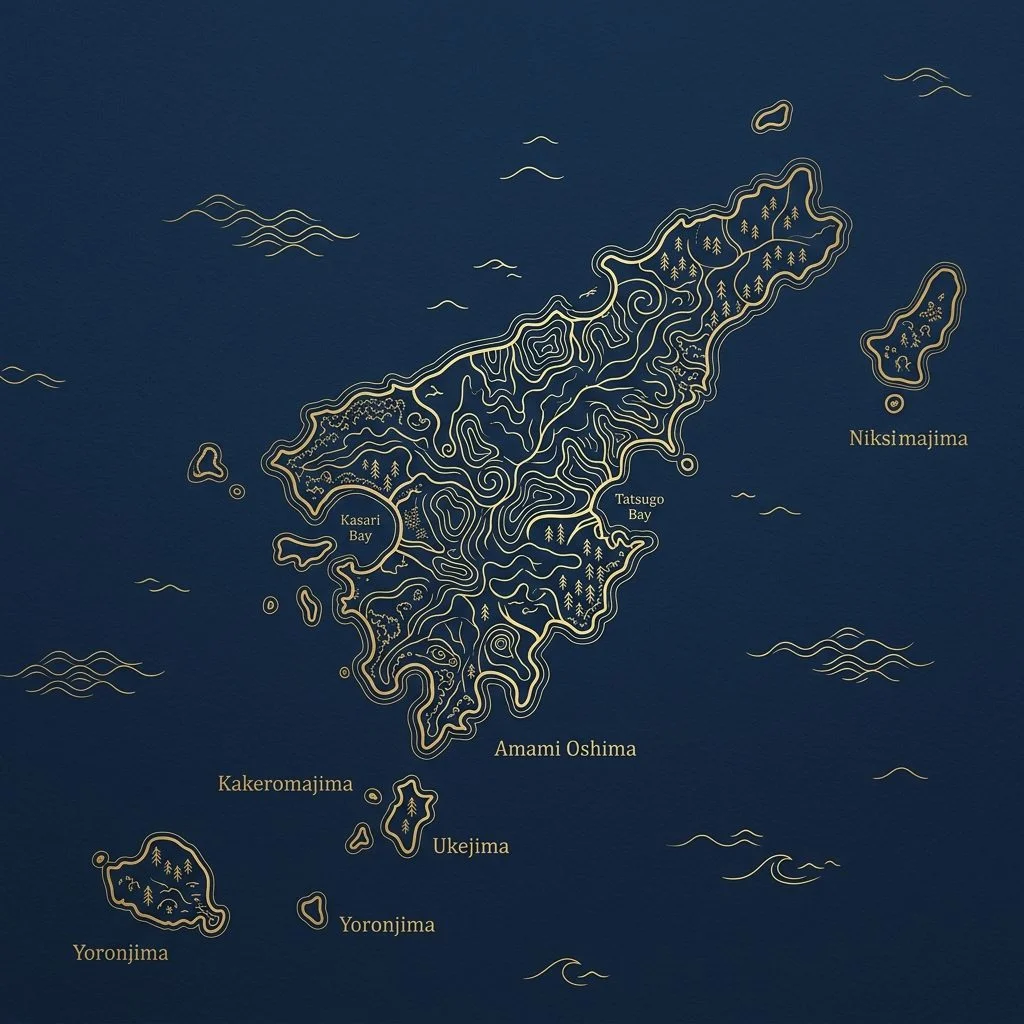
Amami Kokuto Shochu is a legendary spirit permitted to be produced exclusively within the Amami Islands.
Unlike western rum made by directly fermenting sugar juice, Kokuto Shochu establishes its unique flavor profile by employing both brown sugar and rice koji.
Discover the history of sugarcane cultivation, the post-war transition from illicit spirits, and the 1953 special exemption upon reversion to Japan.
📖 Sakelog Kokuto Shochu Guide Directory
- 1. What is Amami Kokuto Shochu?
- 2. Terroir and Sugarcane Culture
- 3. Transfer of Distillation Technology
- 4. Development of Kokuto Shochu and Post-War Struggles
- 5. Reversion to Japan in 1953 and Legal Exemption
- 6. Trademark Protection and Appellation Standards
- 7. Amami Shochu Today
- 8. Frequently Asked Questions (FAQ)
1. What is Amami Kokuto Shochu?
Amami Kokuto Shochu is a traditional Japanese spirit (classified under Authentic Shochu) produced across the Amami Islands (Amami Oshima, Kikaijima, Tokunoshima, Okinoerabujima, and Yoronjima). By law, its production requires the combination of brown sugar (kokuto) and rice koji, distilled using single-pot stills.
Rum
- Raw Material: 100% Sugarcane juice or molasses
- Koji Starter: None. Sugars are directly fermented by yeast.
- Category: Spirits
- Flavor Profile: Grass-like notes and sweet ester aromas resulting from direct sugarcane caramelization.
Authentic Kokuto Shochu
- Raw Material: Brown sugar + Rice Koji
- Koji Starter: Required. Rice koji breaks down starches, creating citric acids and amino acids.
- Category: Authentic Shochu (Single Distilled)
- Flavor Profile: Citric crispness from koji balanced by the soft, warm sweetness of steamed brown sugar, resulting in an elegant, dry finish.
* Why Use Koji Starter?
The identity of Japanese authentic shochu lies in parallel multi-fermentation using "koji" mold. The citric acid generated by koji starter protects the fermenting mash from spoilage in Amami's warm, humid climate. Furthermore, the rice koji imparts rich amino acids and clean aromatics, creating a structured, umami-rich palate that distinguishes it from western rum.
2. Terroir and Sugarcane Culture
Blessed with a maritime climate, the Amami Islands have cultivated sugarcane for centuries. Under 17th-century Satsuma rule, sugar production was strictly enforced as a tax commodity, limiting rice cultivation. Because sugar was exported as a currency, brown sugar was historically a precious commodity for locals.
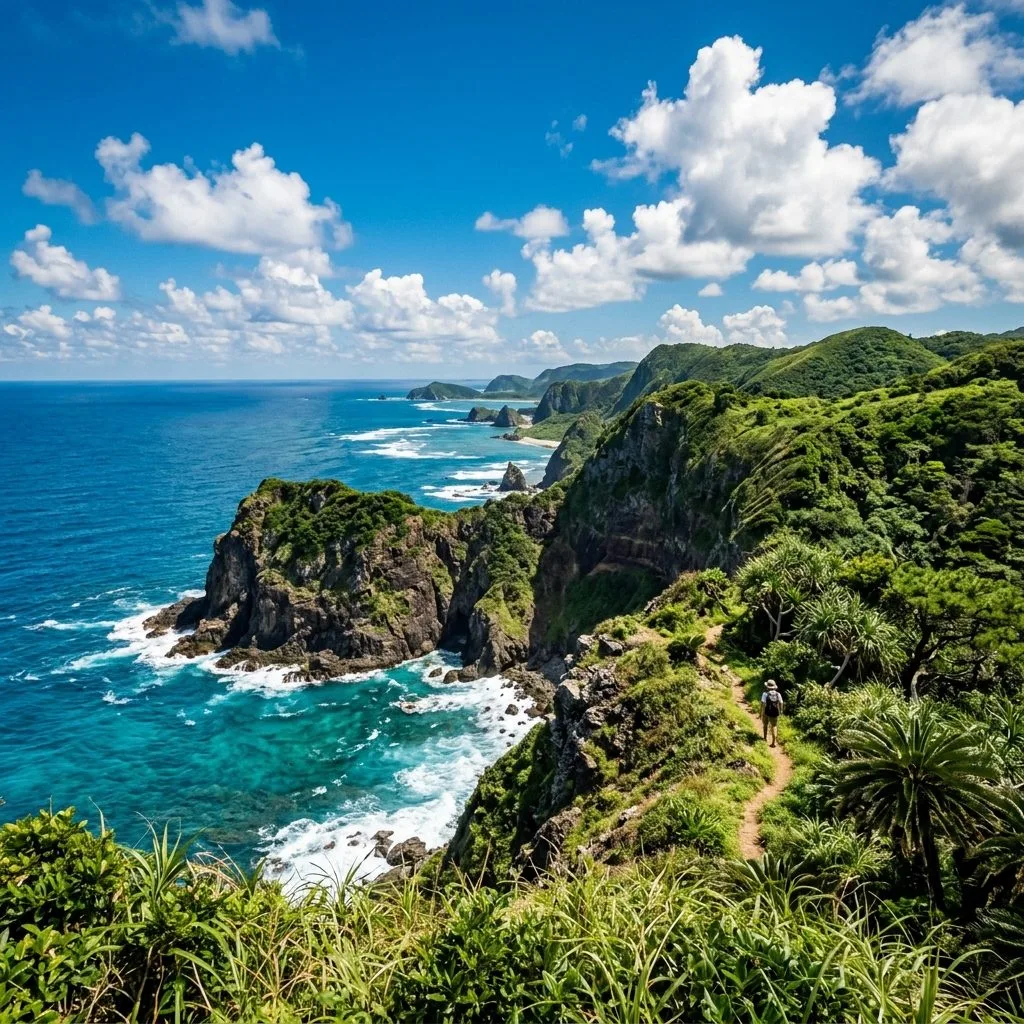
Scenic sugarcane fields looking out to the sea
3. Transfer of Distillation Technology
Distillation technology is believed to have reached the Amami Islands from Southeast Asia via trade routes through the Ryukyu Kingdom. Early distillates likely utilized grains or local starches, sharing similarities with historic Awamori styles.
4. Development of Kokuto Shochu and Post-War Struggles
Over time, islanders refined their methods, using sugar byproduct or dark molasses for home consumption. This formed the primitive root of modern Kokuto Shochu.
[Post-War Recovery and Overcoming Illicit Brewing]
Following World War II, the Amami Islands were separated from the Japanese mainland and placed under US military government rule. Severe food shortages led to a surge in illicitly brewed moonshine, often made from low-grade sugar under risky sanitizing conditions.
Despite these hardships, local distillers united to form a cooperative to re-establish a safe, legally recognized spirit. This local initiative laid the groundwork for the legal exemption granted when the islands reverted to Japan in 1953.
5. Reversion to Japan in 1953 and Legal Exemption
In December 1953, the Amami Islands returned to Japanese sovereignty. With this reversion, the National Liquor Tax Law took effect.
Normally, sugar-based spirits fall under the classification of "Spirits (like Rum)." However, due to Amami's unique history, a special exemption was created: spirits using brown sugar alongside rice koji would be classified as "Authentic Shochu (乙類)," permitted exclusively within the Amami Islands.
Historical Timeline of Amami Shochu
Sugarcane is introduced. Under Satsuma Clan rule, sugar becomes a tax commodity, making it highly valuable.
Islanders distill molasses and surplus brown sugar, forming the prototype of Kokuto Shochu.
Amid material shortages, moonshine spreads. Local distilleries unite to advocate for safe, legal production standards.
Amami returns to Japan. A special exemption allows spirits using rice koji and brown sugar to be classified as Authentic Shochu.
"Amami Kokuto Shochu" is registered under the Japan Patent Office, establishing a protected regional brand.
Under trademark protection, distillers innovate with vacuum distillation and oak barrel aging, expanding global reach.
6. Trademark Protection and Appellation Standards
In 2009, "Amami Kokuto Shochu" was officially registered as a Regional Collective Trademark under the Japan Patent Office. This limits the brand name exclusively to spirits produced within the Amami Islands using designated traditional methods.
Managed by the Kagoshima Shochu Association, these strict regulations guarantee the authenticity, history, and craftsmanship of every bottle bearing the Amami name.
7. Amami Shochu Today
Today, distilleries across Amami, Kikai, Tokunoshima, Okinoerabu, and Yoron produce a diverse range of styles. Techniques range from traditional atmospheric distillation (preserving rich roasted aromas) to vacuum distillation (yielding clean, fruity notes), alongside long-term aging in oak barrels or earthenware pots.
Two Key Distillation Methods
Distilled at standard pressure at around 100°C. Extracts rich roasted sesame aromas, deep complexity, and full-bodied sugarcane oil components. Highly suitable for long-term aging.
Distilled under vacuum conditions, lowering the boiling point to 40°C–50°C. Prevents heat-induced impurities, resulting in elegant fruit-like fragrances and a light, crisp body.
8. Frequently Asked Questions (FAQ)
Generally, distilled spirits like shochu do not transfer sugar or purines from the raw ingredients to the final product during the distillation process. However, because specifications may vary by product, please check individual labels or manufacturer publications for details.
Amami Kokuto Shochu is made by fermenting brown sugar, rice koji, and water, then distilling the mash in a single-pot still. Rum uses sugarcane juice or molasses but does not have the same rice-koji requirement under Japanese liquor classification. Flavor varies widely with distillation and aging.
Under the special exemption of the national Liquor Tax Law enacted upon the 1953 reversion of the Amami Islands to Japan, authentic shochu using brown sugar is legally permitted for production exclusively within Kagoshima's Amami region. Therefore, spirits made with the same method elsewhere cannot legally be labeled as 'Authentic Kokuto Shochu' in Japan.
Taste the Heritage with Your Senses
Amami Kokuto Shochu is shaped by the resilience of the islanders and their unique terroir.
Savoring a glass with its historical context reveals a deeper story.
References & Sources
- • National Tax Agency (NTA): "Q&A on Alcohol: Definition & Classification of Liquors" (Referenced for Rice Koji requirement and special exemptions under the Liquor Tax Law within the Amami Islands)
- • Japan Patent Office (JPO): "Regional Collective Trademark Registration: Amami Kokuto Shochu (No. 5202680)" (Referenced for trademark scope, legal protection requirements, and ownership)
- • Kagoshima Prefecture Shochu Association: "Definition and Quality Standards of Authentic Shochu & Awamori" (Referenced for quality management and manufacturing specifications)
- • Amami Islands Shochu Association: "History and Tradition of Amami Kokuto Shochu" (Referenced for post-war military administration, local movement against illicit brewing, and the 1953 reversion petition)